Supply Chain & Logistics | Inventory Optimisation & Demand Sensing
Reduction in stockouts across the network within two quarters
Inventory capital freed through reorder level recalibration

About
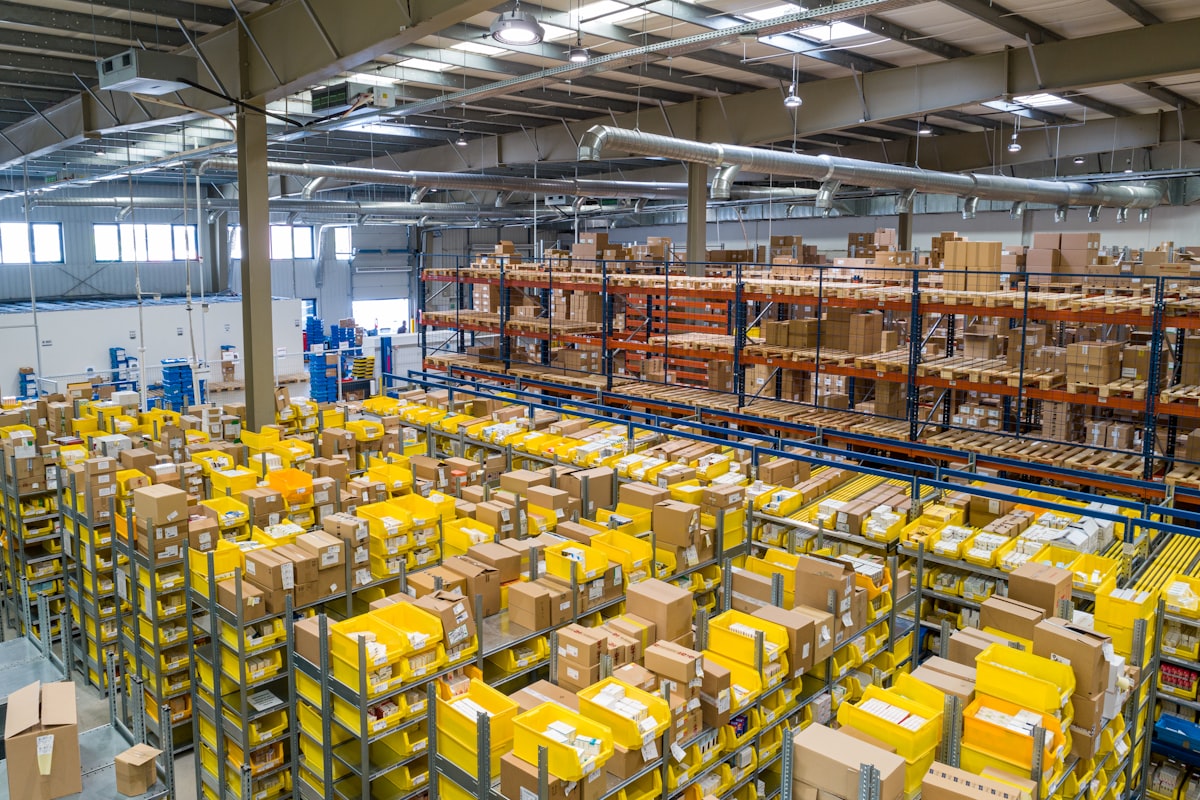
Vantage 3PL manages inventory for 14 FMCG and retail clients across a network of 8 warehouses, with combined managed inventory valued at approximately Rs. 180 Cr at any given time. The company's core value proposition is inventory reliability — consistently maintaining the right stock at the right location to support client service level commitments. A persistent pattern of simultaneous overstock and stockouts was undermining that promise.
Industry
Supply Chain & Logistics | Inventory Optimisation & Demand Sensing
Company size
500 – 1,000 employees
Founded
2010
The Company
A managed inventory business experiencing a paradox it could not resolve
Vantage 3PL manages inventory for 14 FMCG and retail clients across a network of 8 warehouses, with combined managed inventory valued at approximately Rs. 180 Cr at any point in time. The company's core value proposition to clients is inventory reliability — the ability to consistently maintain the right stock at the right location to support their service level commitments to end customers.
Despite managing significant inventory volumes, Vantage was experiencing a persistent and paradoxical problem: simultaneous overstock and stockouts across the network. Some SKUs at some locations were carrying 90 to 120 days of inventory, while the same SKUs at other locations were experiencing stockouts that disrupted client service commitments. The business had the stock. It was in the wrong place.
The challenge
Eight warehouses operating as eight independent systems
The root cause was a fragmented replenishment planning process. Each warehouse operated its own replenishment cycle based on local reorder points that had been set historically and rarely updated. The system had no mechanism for network-level visibility — no ability to recognise that a warehouse running low on a SKU could be replenished from a sister warehouse with excess, rather than from the supplier on a lead time that would result in a stockout.
Clients were paying for managed inventory that was in the wrong place — and experiencing service failures that were, in reality, a network distribution problem rather than a true inventory shortage. The trust implications of this were significant: Vantage's value proposition was inventory reliability, and its own planning infrastructure was making that promise impossible to keep consistently.
With Rs. 180 Cr of managed inventory across the network, even small improvements in positioning efficiency represented substantial financial value — both for Vantage's clients and for the working capital efficiency of the network as a whole.
The Solution
Multi-echelon optimisation treating eight warehouses as one system
Seven Billion implemented a multi-echelon inventory optimisation system that treated the eight-warehouse network as a single interconnected system rather than eight independent operations.
The optimisation model, built with Gurobi and TensorFlow, solved simultaneously for: optimal reorder points and safety stock levels at each location, dynamically calculated based on actual demand variability, current lead times from each replenishment source, and the service level commitment for each SKU; network rebalancing triggers, identifying situations where excess inventory at one location should be transferred to another facing a shortage, with transfer cost weighed against stockout cost; and dynamic demand sensing — a short-horizon demand model that detected early signals of demand acceleration or deceleration and updated reorder recommendations in near real-time.
Azure Synapse Analytics was used to consolidate data from all eight warehouse management systems into a unified inventory analytics platform, providing the network-level visibility the replenishment model required. For the first time, the planning team could see the full inventory picture across the network — and act on it.
The Results
Stockouts down 32%, Rs. 5 Cr freed, and client satisfaction materially improved
Stockouts reduced by 32% across the network within two quarters of deployment, with the greatest impact on high-velocity SKUs where demand sensing provided the most lead time to respond to demand shifts. Rs. 5 Cr in inventory capital was freed as safety stock levels were recalibrated to reflect actual demand variability rather than historical rules of thumb.
Excess inventory write-offs reduced by 28% as the network rebalancing system redirected slow-moving inventory from low-demand locations to high-demand locations before expiry or obsolescence. Perfect order rate — the proportion of orders delivered complete, on time, and without error — improved by 19%, directly improving client satisfaction scores.
The improvement in client satisfaction was measurable and immediate. Clients that had been experiencing recurring service failures attributed to stockouts saw those failures eliminated within the first quarter of deployment — converting a source of client relationship risk into a demonstration of Vantage's operational capability.

The improvement in client satisfaction has been immediate. Accounts that were raising service queries every week have gone quiet — in the best possible way. That is what inventory reliability actually looks like.
Head of Operations, Vantage 3PL
KEEP READING
Explore more studies on AI, analytics, and enterprise intelligence.