Logistics & Port Operations | GenAI & Operational Analytics
Reduction in IT data query dependency for operational teams
Faster time to operational insight

About
Portline Container Services is a port logistics operator managing container movements, vessel scheduling, and yard operations across two major port facilities. The operational environment generates significant volumes of transactional data daily — but the team making operational decisions had no direct access to it. Every data request went through an IT queue, and by the time answers arrived, the moment to act had often already passed.
Industry
Logistics & Port Operations | GenAI & Operational Analytics
Company size
500 – 1,000 employees
Founded
2002
The Company
A data-rich port operation where operational teams had no access to the data
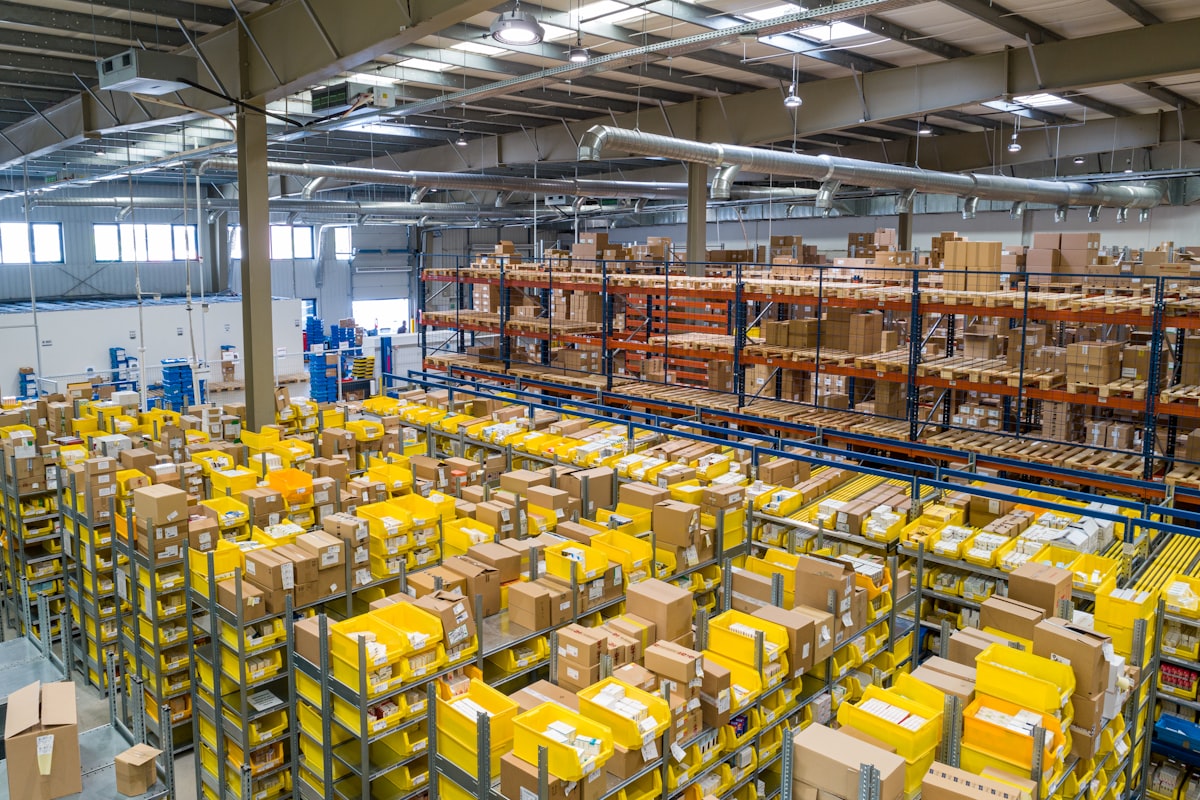
Portline Container Services is a port logistics operator managing container movements, vessel scheduling, and yard operations across two major port facilities. The operational environment generates significant volumes of transactional data — container arrival and departure records, vessel berthing logs, yard allocation events, and equipment utilisation metrics — stored in a relational database managed and maintained by the operations technology team.
The operations team — port supervisors, vessel coordinators, and logistics planners — needed regular access to this data to manage daily decisions. But accessing it required SQL queries against a database that the operational team had neither the skills nor the access rights to run directly. Every data request went through IT, and the average turnaround for a routine query was 24 to 48 hours.
The challenge
A 48-hour queue for answers to questions that needed answering in seconds
The operational environment at Portline changes rapidly. Which containers are due for gate-out in the next 48 hours? What is the current dwell time distribution across the yard? Which vessels are running behind schedule and how does that affect berth availability for tomorrow? These were routine questions with clear business value — but accessing the answers required a request to IT and a wait that made the answers arrive too late to be actionable.
The IT team had attempted to address the problem with a set of pre-built reports, but the operational environment changes too rapidly for a fixed set of reports to cover the question set that emerges day to day. New operational situations generated new questions that required new queries — and the cycle of dependency continued.
Supervisors were making decisions on incomplete information or waiting for answers that arrived after the window to act had closed. The IT team, meanwhile, was spending a disproportionate share of its capacity on data requests that required no technical expertise — but which required SQL access that the operational team did not have.
The Solution
A Text-to-SQL interface that gave operational teams direct access to their data
Seven Billion built a Text-to-SQL interface powered by GPT-4, deployed as a lightweight web application integrated with the operational database. The interface allowed operational users to type questions in plain English — exactly as they would ask them of a colleague — and receive accurate SQL-generated responses with the underlying query displayed for transparency.
The system was designed with several features that distinguished it from a generic Text-to-SQL implementation: domain-aware schema understanding, with the model fine-tuned with the Portline database schema, operational terminology, and common query patterns; query validation and safety controls ensuring all generated SQL was validated before execution and read-only database access enforced at the infrastructure level; plain-language result interpretation for numerical outputs; and a query history and favourites function allowing users to save frequent queries as named favourites for single-click reuse.
The result was a system where port supervisors, vessel coordinators, and logistics planners could access any data they needed — without SQL knowledge, without IT involvement, and without waiting. Operational questions that had required a 48-hour queue were answered in under 10 seconds.
The Results
80% reduction in IT dependency and 4x faster operational decision-making
IT data query dependency reduced by 80% — the vast majority of routine operational data requests are now self-served through the interface, with IT involvement limited to complex analytical requests requiring custom development. The IT team reported a significant reduction in data request volume, freeing capacity for the infrastructure and development work that genuinely requires technical expertise.
Time to operational insight improved by 4x — questions that previously took 24 to 48 hours to answer through the IT queue are now answered in seconds. Each operational user saved an average of 6 hours per week previously spent waiting for or chasing data requests.
The quality of operational decision-making improved in several documented instances where supervisors accessed real-time data to inform urgent decisions that would previously have been made on incomplete information. With direct data access, the operations team began asking questions they had never previously thought to ask — and the answers shaped better operational decisions across the facilities.

The change in how our operations team works is remarkable. Questions that used to take two days to answer now take ten seconds. And because our people can ask questions themselves, they are asking better questions — and making better decisions as a result.
Head of Operations Technology, Portline Container Services
KEEP READING
Explore more studies on AI, analytics, and enterprise intelligence.